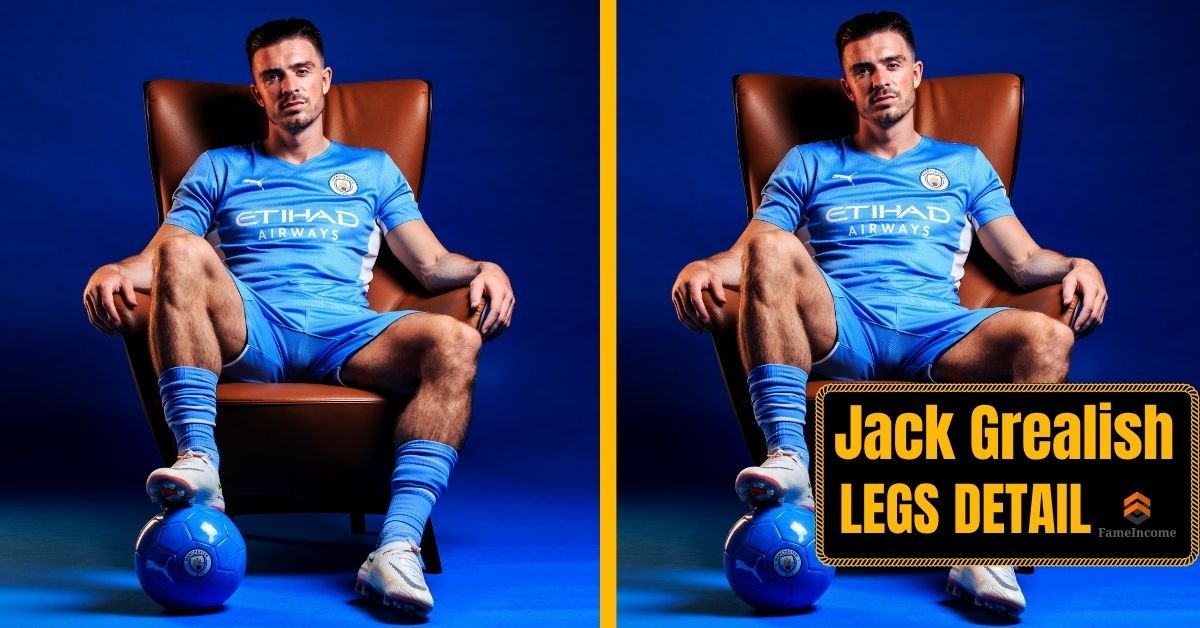
Few sights in modern football are as striking as Jack Grealish running at a defender at full speed. His lower body is powerful, compact, and built for the chaos of Premier League football. Jack Grealish legs have become one of the most talked-about physical features in the game today.
When people watch him play, they immediately notice something different about his build. He carries more muscle in his thighs and calves than most wingers in the world. That physical difference is not accidental; it is the result of years of dedicated athletic development.
The discussion around Jack Grealish legs goes far beyond simple appearance or social media attention. It connects to biomechanics, injury science, tactical football, and even fashion trends. This article breaks down every angle of that conversation in full detail.
Who Is Jack Grealish?
Jack Grealish is an English professional footballer who currently plays for Everton. He joined on loan from Manchester City for the 2025 to 2026 Premier League season. He is known globally as one of England’s most creative and exciting attacking players.
He was born on the 10th of September 1995 in Birmingham, England, and grew up in Solihull. From a very young age, he showed natural talent on the football pitch. Aston Villa signed him as a six-year-old and developed him into the player the world knows today.
Jack Grealish legs became a topic of wide public interest as his career grew bigger. His muscular lower body, combined with his rolled-down socks, made him instantly recognisable on any pitch. He is now one of the most marketable and discussed athletes in world football.
See More: Brenda Patea
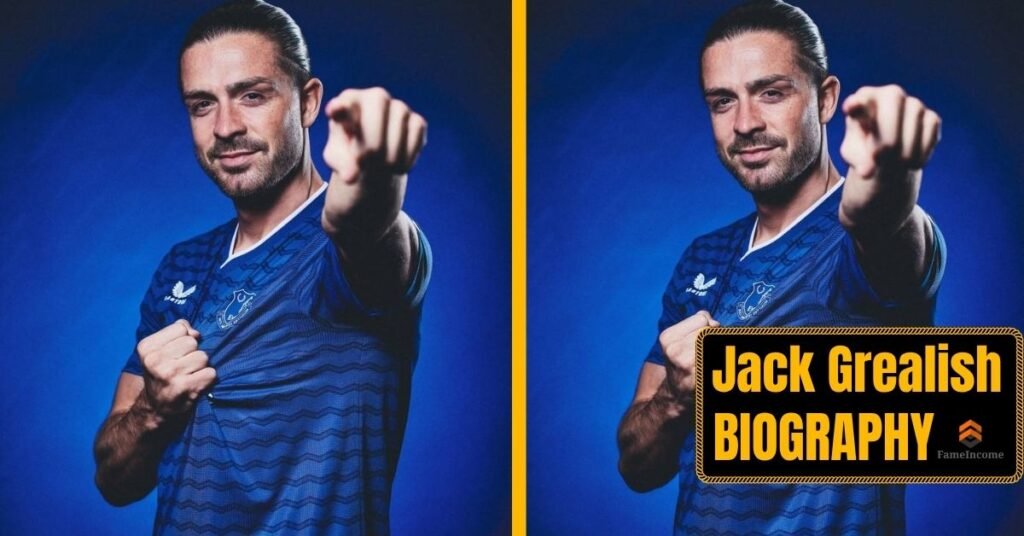
Jack Grealish Biography
| Detail | Information |
| Full Name | Jack Peter Grealish |
| Date of Birth | 10 September 1995 |
| Place of Birth | Birmingham, West Midlands, England |
| Raised In | Solihull, England |
| Height | 5 ft 11 in (1.80 m) |
| Nationality | English |
| Heritage | Irish descent (Dublin, Galway, Kerry roots) |
| Religion | Roman Catholic |
| School | St Peter’s Roman Catholic Secondary School, Solihull |
| Position | Left Winger / Attacking Midfielder |
| Current Club | Everton (on loan from Manchester City) |
| Shirt Number | 18 |
| Youth Club | Highgate United, then Aston Villa from age 6 |
| Aston Villa Senior Career | 2013 to 2021 — 185 appearances, 29 goals |
| Loan at Notts County | 2013 to 2014 — 37 appearances, 5 goals |
| Manchester City Transfer Fee | £100 million (August 2021) the most expensive British player at the time |
| Manchester City Career | 2021 onwards — 94 appearances, 12 goals |
| Everton Loan Start | August 2025 |
| International Team | England senior (chose England over the Republic of Ireland in 2015) |
| International Caps | 39 caps, 4 goals (as of October 2024) |
| Major Honours | Premier League x3, Champions League, FA Cup, UEFA Super Cup, FIFA Club World Cup |
| Individual Award | Premier League Player of the Month — August 2025 |
| Girlfriend | Sasha Attwood (together since secondary school) |
| Hobbies | Amateur DJ, music fan (Elvis Presley, Queen) |
| Notable Personal Fact | Sister Hollie has cerebral palsy; he calls her his best friend |
| Family Tragedy | Younger brother Keelan died of SIDS in April 2000 |
| Ancestor | Great-great-grandfather Billy Garraty won the 1905 FA Cup with Aston Villa |
Jack Grealish Legs
Jack Grealish legs are one of the most recognised physical features in professional football. They are muscular, compact, and built for power rather than pure speed. Every time he steps onto the pitch, his lower body becomes the centre of attention.
His thighs are notably thick for a winger, and his calves are large and well-developed. This gives him a body shape that looks more like a rugby player than a traditional wide footballer. That unique build is central to everything he does on the ball.
Jack Grealish Legs: Key Physical Details
| Feature | Detail |
| Leg Build Type | Muscular and compact, low centre of gravity |
| Thigh Muscle | Heavy quadriceps for power and shielding |
| Calf Size | Notably large, described as “tree trunks” by former teammate Danny Haynes |
| Calf Type | Gastrocnemius is dominant with a strong genetic predisposition for size |
| Shin Pad Size | Child-sized, worn for better ball control and comfort |
| Sock Style | Rolled down to the ankles, a signature look |
| Primary Strength | Deceleration force — among the elite in the Premier League |
| Foul Record | 167 fouls drawn in a single Premier League season (2019–20) — a record |
| Centre of Gravity | Lower than most wingers due to mass distribution in thighs and glutes |
| Biomechanical Advantage | Quicker stride frequency, rapid direction change, harder to knock off balance |
Jack Grealish Legs Muscle
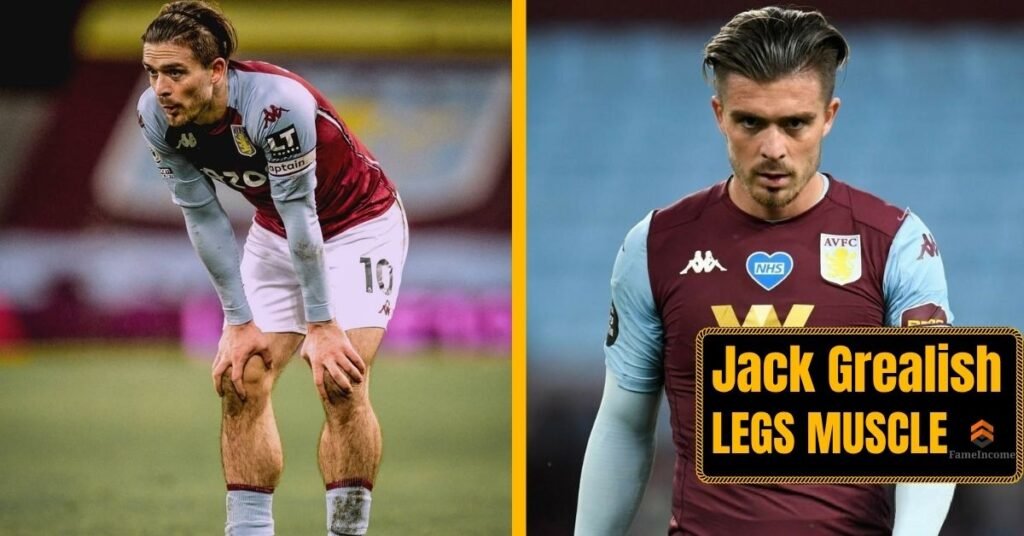
The muscle structure of Jack Grealish legs is built around function, not just aesthetics. His quadriceps carry an unusual amount of mass for someone who plays as a winger. This directly supports his ability to hold the ball, absorb contact, and change direction at full speed.
His hamstrings and adductors also carry significant muscle from years of eccentric loading. The constant stop-and-start movement of his playing style demands this kind of strength. Without it, his signature dribbling style would break down very quickly under physical pressure.
His glutes and calves complete a lower body that is engineered for durability and power. Every muscle group works together to support his shielding, dribbling, and foul-drawing ability. Jack Grealish legs are not just visually striking, they are athletically purposeful at every level.
The Biomechanical Advantage of His Lower Centre of Gravity
Jack Grealish legs give him a biomechanical advantage that most wingers simply do not have. Because his muscle mass sits low in his body, his centre of gravity sits much closer to the ground. This makes it extremely difficult for any defender to knock him off balance.
When a defender goes in to tackle him, they are trying to displace a body that is already well-anchored to the turf. His short femur length also allows him to take quicker, more frequent steps than taller players. These rapid micro-movements make it very hard to predict which direction he will go.
This low pivot point creates a natural stability that no amount of training can fully replicate in someone built differently. It is partly genetic and partly the result of years of lower body development. For Grealish, his body shape is one of his biggest natural advantages on the football pitch.
Why His Socks and Shin Pads Became a Signature
The image of Jack Grealish legs is inseparable from his habit of wearing his socks rolled down. What started as a personal comfort choice quickly became a recognisable visual trademark. Traditionalists questioned it, but the football world eventually accepted and even copied it.
From a practical standpoint, exposed skin is more slippery than nylon sock fabric for defenders trying to grab him. This subtle difference forces opponents to adjust how they attempt to hold or foul him. Many of those adjustments result in fouls just outside the penalty area, exactly where he is most dangerous.
Grealish himself has confirmed he rolls his socks down partly out of superstition and partly to relieve calf pressure. He also wears child-sized shin pads to maintain better feel and control of the ball. Together, these choices have shaped a look that is now copied by young players all over the world.
The Role of Quadriceps Strength in Drawing Fouls
No player in the Premier League has consistently drawn more fouls per ninety minutes than Jack Grealish over recent seasons. This is directly connected to the raw power stored in his quadriceps muscles. When a tackle comes in, his legs absorb the force and keep him standing just long enough for the referee to see the contact.
His quad strength acts like a shock absorber during physical challenges from defenders. He drives his leg into the path of the incoming tackle with precise timing and muscle control. A weaker player in the same situation would simply lose the ball or fall without any foul being awarded.
This ability to invite and survive contact is a skill that has been developed over many years of professional football. It is impossible to perform consistently without the muscular endurance that Jack Grealish legs carry. His lower body turns physical confrontations into set-piece opportunities time and time again.
Conditioning Demands of the Inverted Winger Role
Playing as an inverted winger on the left side requires a very specific kind of physical conditioning. Grealish does not simply run in straight lines up and down the touchline like a traditional wide player. He constantly stops, starts, cuts inside, and changes direction under heavy defensive pressure.
This pattern of movement places an enormous eccentric load on the hamstrings and adductors throughout every match. Training for this role means focusing heavily on deceleration rather than pure top speed. The ability to brake from a full sprint in just one or two strides is what makes his style so effective.
His conditioning programme includes plyometric stability work, single-leg squats, and isometric holds to support this demand. GPS tracking is used to monitor his high-speed running load after every game. If the load spikes too high, his training is reduced to protect the soft tissue in Jack Grealish legs from breaking down.
See More: Who Is Christina Carano?
Aesthetic Standards and the Modern Football Physique
For many years, the ideal footballer’s leg was lean, veiny, and low in body fat, almost like a distance runner. Jack Grealish, alongside players like Erling Haaland, has completely shifted that aesthetic expectation. The modern game now accepts and even celebrates a thicker, more powerful lower body build.
His physique has shown that carrying muscle bulk does not reduce agility or footballing quality. In fact, it improves a player’s ability to survive the physical demands of a long Premier League season. Youth coaches now train young players to develop lower-body strength as a weapon, not something to avoid.
Jack Grealish legs have become a visual symbol of this new standard in football fitness. Strength and skill are no longer seen as opposites in how a winger should look and play. The game has shifted toward valuing robustness, and Grealish represents that shift better than almost anyone.
The Impact on His Marketability and Brand Identity
Jack Grealish is one of the most commercially valuable footballers in the world right now. His physical appearance, including his famous legs and rolled socks, plays a direct role in that status. In a world of polished and similar-looking athletes, his silhouette is immediately recognisable.
Brands that work with him benefit from a visual identity that combines toughness with creativity. The image of his muscular, scarred legs alongside his styled hair and designer clothes creates a powerful contrast. It presents him as both a street footballer and a modern superstar at the same time.
This duality makes him relatable to fans of all ages and backgrounds across the world. Sunday league players see the socks and feel a connection to him on a personal level. Meanwhile, fashion brands and luxury companies see the same image and recognise a man who bridges two very different worlds.
Common Injuries and Preventative Protocols
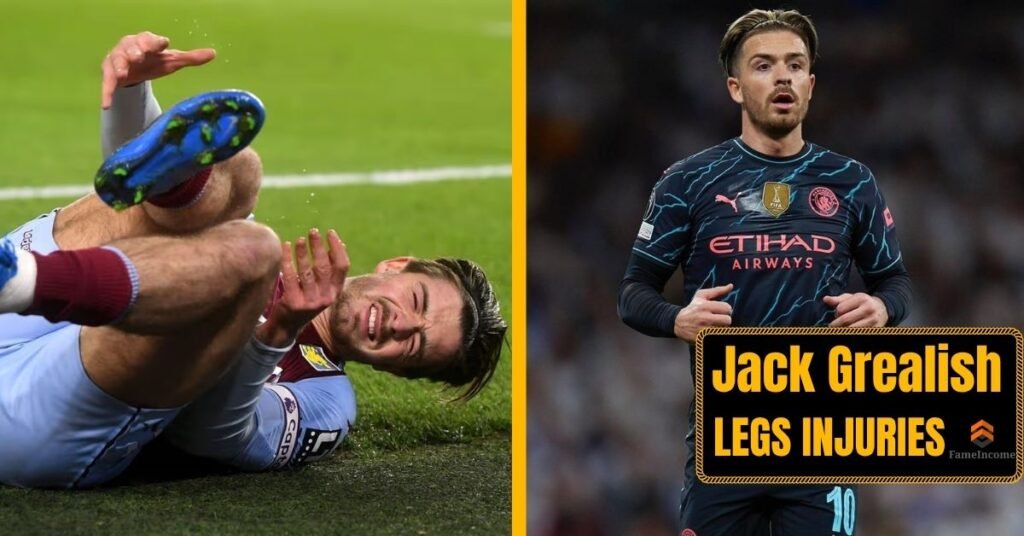
The way Jack Grealish plays football puts constant pressure on his lower body. All that twisting, turning, and contact exposure places him at high risk for several specific types of injury. His history shows that most of his absences have been caused by muscular tightness rather than structural damage.
The main areas of concern are the groin, hamstrings, and inner thigh muscles. These are all heavily loaded by the stop-start, cut-inside movements that define his playing style. His sports science team works carefully to protect these areas through a structured prevention programme.
Jack Grealish Legs: Injury and Prevention Table
| Body Area | Primary Role | Main Injury Risk | Prevention Method |
| Quadriceps | Explosive acceleration and contact resistance | Contusions from a high contact rate | Heavy squats, Bulgarian split squats |
| Hamstrings | Deceleration and hip extension | Strain from repeated cold sprints | Nordic curls, eccentric slide work |
| Adductors (Groin) | Direction change under pressure | Very high risk from cutting motion | Copenhagen planks, rotational throws |
| Calves and Ankles | Stability and proprioception on turns | Low risk, enhanced by low-cut boots | Single-leg balance drills, plyometric hops |
| Glutes | Posture and shielding integrity | Low risk when well-developed | Hip thrusters, kettlebell swings |
| General Recovery | Full body soft tissue repair | Overload from congested fixtures | Cryotherapy, compression therapy, GPS load monitoring |
Nutrition and Supplementation for Power Maintenance
Keeping the muscle mass in Jack Grealish legs through a long and busy season requires a very precise nutritional approach. The goal is never to add more bulk, which could reduce his speed and agility on the ball. Instead, the focus is on preserving lean muscle while keeping body fat low enough to maintain a strong power-to-weight ratio.
His daily diet is built around high-quality proteins that help repair muscle fibres damaged by intense training and matches. Carbohydrate intake is carefully timed around fixtures so that his legs feel loaded and powerful when it matters most. This kind of planning ensures he does not fade physically in the later stages of games.
Key Nutritional Priorities for Jack Grealish:
- High biological value protein consumed consistently throughout the day to support muscle repair
- Creatine monohydrate supplementation helps regenerate energy for repeated high-intensity efforts
- Carbohydrate loading before matches to fill glycogen stores in those large muscle groups
- Careful hydration management to prevent cramping during physically demanding games
- Reduced training load after heavy matches to allow full nutritional recovery to take effect
The Psychological Resilience of Playing “Heavy”
There is a strong mental dimension to having a powerful and muscular lower body as a footballer. Grealish plays with a deep confidence that comes from knowing his legs can handle whatever a defender throws at him. This psychological foundation changes how he approaches every single moment on the pitch.
He actively seeks out tight spaces and physical confrontations rather than avoiding them as many wingers do. This willingness to enter contact situations is rooted in the real physical strength he carries in his lower body. Defenders who are usually the aggressors suddenly find themselves being the ones under pressure.
This mental edge, built on the solid reality of Jack Grealish legs, makes him uniquely effective against low defensive blocks. He does not need open space to be dangerous because he can simply overpower the first challenge he faces. That confidence in his own body is one of the least discussed but most important parts of his game.
How His Physique Influences Tactical Marking
Opposing managers cannot set up against Jack Grealish the way they would against a traditional fast winger. The usual instruction to get close, be physical, and win the ball directly simply does not work against him. Because of the strength in his legs, defenders who try that approach often end up giving away fouls in dangerous areas.
Smarter coaches instruct their defenders to sit off Grealish and protect the passing lane instead. This tactical decision is actually a concession; it gives him space and time to look up and play. His legs, which are built for dribbling, end up creating opportunities for teammates without him even needing to beat his man.
The fear that Jack Grealish legs create in defensive minds reshapes entire team shapes and game plans. Full-backs are given extra protection, central midfielders are asked to cover more ground, and wide defenders drop deeper. All of this happens because one player’s physical profile forces the entire opposition to reorganise.
A Turning Point in Uniform Regulations
The Premier League has always maintained clear rules about sock height and shin pad coverage during matches. Yet the persistent and very public image of Jack Grealish legs has created a widely accepted loophole in how those rules are applied. The regulation says shin pads must be covered by socks, but does not specify that the socks must be pulled up to the knee.
Grealish and the many players who have copied him wear oversized socks bunched down around the ankle area. This technically satisfies the written rule while completely ignoring its original intention. Referees, particularly younger ones, rarely enforce the old standard anymore because the look has become so normalised.
Some kit manufacturers have now started producing socks specifically designed to be worn in this bunched-down style. This represents a player-led cultural shift that has changed an industry. What began as one man’s personal comfort choice has permanently altered the uniform habits of a generation of footballers.
The Cultural Shift Toward “Playground” Aesthetics
There is a deep nostalgia connected to the way Jack Grealish looks when he plays football. His rolled socks and exposed calves remind older fans of playground football, where the best player never needed to look the part. In a Premier League that has become increasingly corporate and polished, that image feels genuinely refreshing.
This aesthetic resonates strongly with supporters who grew up playing football in the streets or on local pitches. It suggests that Grealish plays because he loves the game, not simply because of the money or the spotlight. That emotional connection is rare and extremely powerful in modern professional sport.
Social media has amplified this cultural moment far beyond what television coverage alone could achieve. Clips of his thighs flexing during warm-ups go viral, memes spread across platforms, and young fans imitate the sock roll on their own pitches. Jack Grealish legs have become a symbol that connects a multimillionaire athlete to the everyday football fan.
Addressing the Misconception of “Skinny” Playmakers
There has long been a belief in football that agility requires a low body mass and a lean, lightweight frame. Jack Grealish directly challenges and dismantles that assumption every time he plays. His muscular build proves that elite dribbling and genuine physical power are not in conflict with each other.
In fact, his strength allows him to perform his signature moves, the shoulder drop and the stop-start, with greater deception. Defenders have to respect the possibility that he might simply drive through them rather than dance around them. That respect creates hesitation, and hesitation is exactly what a dribbler needs to succeed.
Skinny vs. Strong Winger: A Comparison
| Factor | Lean/Skinny Winger | Grealish-Style Strong Winger |
| Ball Shielding | Limited ability under pressure | Highly effective due to leg and hip strength |
| Foul Drawing | Relies on speed to create distance | Uses the body to absorb and survive contact |
| Change of Direction | Light frame allows quick pivots | Muscle mass adds deception and power to turns |
| Defensive Pressure | Often broken down by physical challenges | Holds position and forces the foul |
| Longevity in Game | Can fade physically in the second half | Muscular endurance maintains output for 90 minutes |
| Youth Development Influence | Encourages restriction of food and bulk | Promotes strength training and healthy robustness |
How Technology Validates His Physical Output
Modern wearable technology used in professional football has confirmed what the naked eye could already see with Grealish. His data shows exceptionally high numbers in a metric called deceleration load during matches. While his top speed is only average for a winger, his ability to stop instantly and change direction is elite-level.
His legs absorb forces several times his own body weight every single time he brakes sharply from a sprint. This physical output cannot be faked or manufactured through technique alone — it requires real muscle strength and structural durability. The numbers give scientific weight to every visual impression that Jack Grealish legs have ever made on a football pitch.
Clubs now use this deceleration data to identify young players who might develop a similar physical profile. Scouts look specifically for low-slung, muscular builds that suggest both durability and change-of-direction ability. In this way, Grealish has become a biometric benchmark that shapes how talent is identified and developed across the game.
See More: Who Is Rachel Mariam?
Jack Grealish Now Today
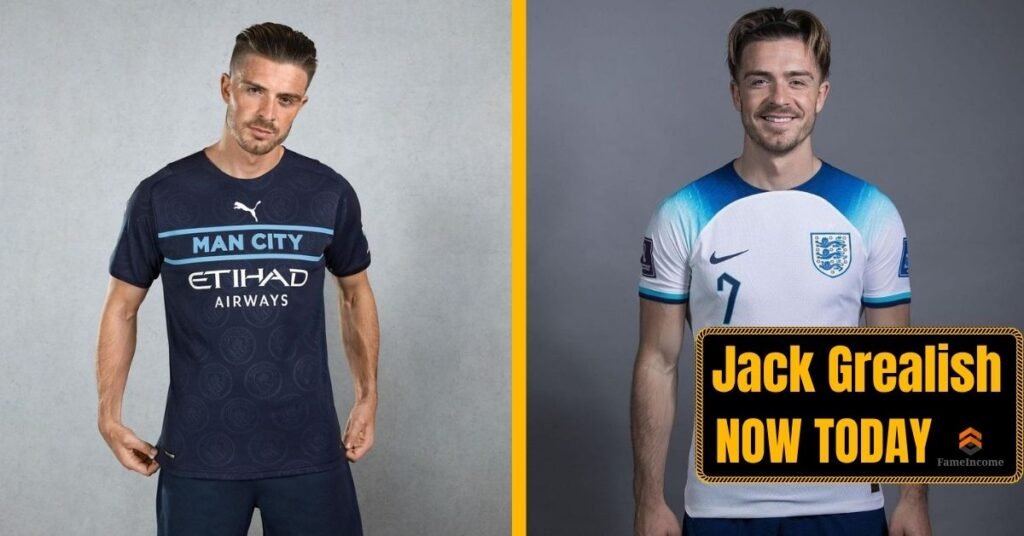
Jack Grealish is currently on loan at Everton for the 2025 to 2026 Premier League season. After a difficult period at Manchester City with limited playing time and injury setbacks, the move has given him a fresh start. He has responded with some of the best form of his recent career.
In August 2025, he provided four assists in the opening weeks of the season and won the Premier League Player of the Month award for the first time in his career. He scored a dramatic 93rd-minute winner against Crystal Palace in October to extend Everton’s winning run. Jack Grealish legs are once again being celebrated in every match he plays.
His loan at Everton has reminded the football world of exactly what he is capable of when given consistent minutes and trust from his manager. Whether he returns to Manchester City or moves on permanently remains one of the big questions of the upcoming transfer window. For now, he is playing with joy and freedom that his supporters have not seen for some time.
Conclusion
Jack Grealish and his famous legs represent something much bigger than one player’s physical appearance. They tell the story of how modern football is evolving in its understanding of what an elite wide player should look like and how they should move. The conversation will continue for as long as he plays the game at the highest level.
His lower body has changed kit trends, influenced youth coaching, shaped tactical game plans, and built a unique personal brand. Every element of the Jack Grealish legs story connects back to the same simple truth that his body is perfectly designed for the way he plays football. That is not a coincidence. That is years of hard work, smart conditioning, and natural athletic gift working together.
Frequently Asked Questions
How did Jack Grealish get such muscular legs?
His legs developed through years of specialised strength training focused on power, stability, and injury prevention. Genetics also play a significant role in his natural muscle size.
Why does Jack Grealish roll his socks down?
He rolls his socks down out of personal superstition and to relieve pressure on his calf muscles during matches.
Are Jack Grealish legs the strongest in the Premier League?
In terms of functional lower body power for his position, he ranks among the very best with elite deceleration force numbers recorded by wearable technology.
Has Jack Grealish had a serious leg injury?
He has avoided major structural damage like ligament tears or broken bones but has missed matches due to muscular tightness in the groin and hamstring areas.
Why does Jack Grealish draw so many fouls?
His quadriceps strength allows him to absorb contact, stay upright, and make fouls clearly visible to referees during physical challenges.
What shin pads does Jack Grealish wear?
He wears child-sized shin pads to maximise his feel for the ball and freedom of movement around his ankles.
Do Jack Grealish legs help him in one-on-one situations?
Yes, his muscular lower body gives him the stability and power to hold off defenders and create space even under intense physical pressure.
Is Jack Grealish naturally muscular or does he train for it?
It is a combination of both. His calf size has a strong genetic component while his thigh and glute strength come largely from years of dedicated training.
How do defenders try to stop Jack Grealish?
Many coaches now instruct defenders to sit off him and protect passing lanes rather than trying to win the ball directly with physical tackles.
What makes Jack Grealish legs different from other wingers?
His lower centre of gravity, combined with thick quadriceps and powerful calves, gives him a physical profile that is genuinely rare among wide attacking players in world football.