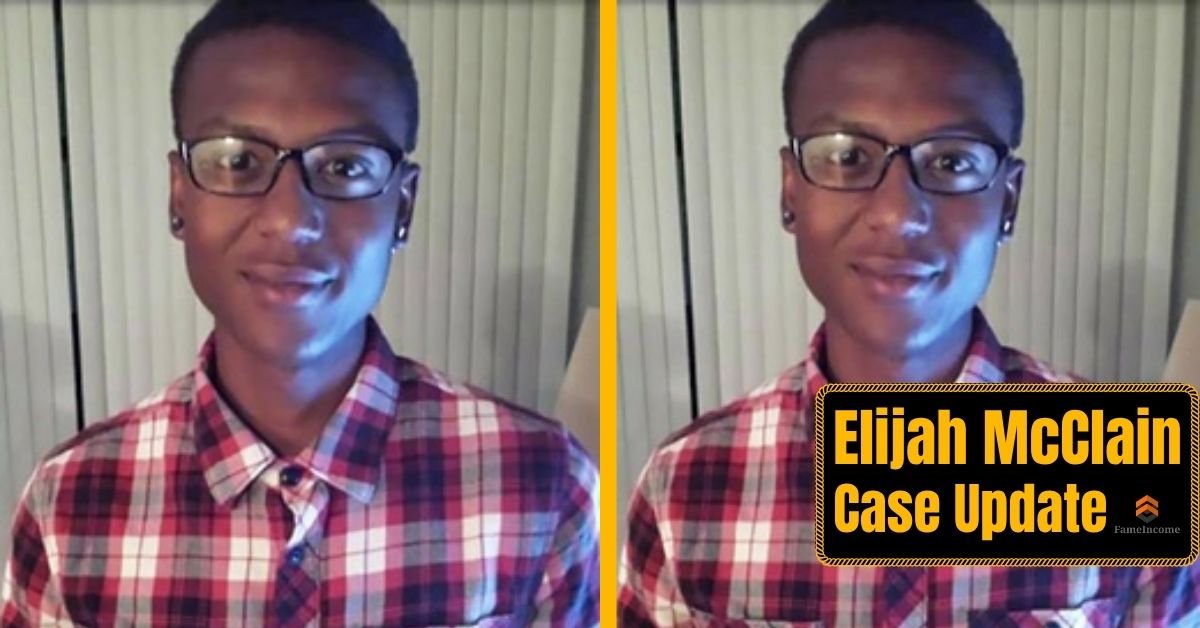
The Elijah McClain case shocked the entire nation and broke millions of hearts. A young, peaceful man lost his life after a routine walk home turned fatal. His story became one of the most discussed cases in modern American history. The Elijah McClain case continues to demand justice even years after his death.
Elijah was not a criminal, not a threat, and not a danger to anyone around him. He was a gentle soul who played violin for shelter animals during his lunch breaks. His death raised serious questions about police conduct and medical responsibility. The world learned his name and refused to forget it.
His final words, captured on body camera audio, moved people across the entire globe. He apologized, explained himself, and expressed love even while being restrained by officers. The Elijah McClain case became a symbol of systemic failure at every level. His voice, though silenced, still echoes loudly in the pursuit of justice.
Who Was Elijah McClain?
Elijah McClain was a 23-year-old Black man from Aurora, Colorado, full of life. He worked as a licensed massage therapist and was deeply loved by everyone around him. He was known for his kind heart, his music, and his peaceful nature. He had no criminal record and was described as one of the gentlest people imaginable.
Those who knew Elijah described him using words like pacifist, oddball, and peacemaker consistently. He was a vegetarian who refused to harm even the smallest animals around him. One of his massage clients called him the sweetest and purest person she had ever met. He was a young man simply trying to live a quiet and meaningful life.
His mother, Sheneen McClain, raised him alongside five siblings in Aurora, Colorado, with deep dedication. She homeschooled Elijah and recognized his intellectual gifts from a very early age. He taught himself to play both the violin and guitar entirely on his own. The Elijah McClain case became personal to millions because he represented so many innocent lives.
See More: Sara Bennett ALS Story
Elijah McClain Biography
| Detail | Information |
| Full Name | Elijah Jovan McClain |
| Date of Birth | February 25, 1996 |
| Place of Birth | Aurora, Colorado, USA |
| Date of Death | August 30, 2019 |
| Age at Death | 23 years old |
| Nationality | American |
| Ethnicity | African American |
| Religion | Spiritual / Personal beliefs |
| Education | Home-schooled |
| Occupation | Licensed Massage Therapist |
| Residence | Aurora, Colorado |
| Living Situation | Shared apartment with cousin |
| Known For | Elijah McClain case, violin playing, gentle nature |
| Criminal Record | None |
| Hobbies | Violin, guitar, animals, spirituality, running |
| Special Traits | Pacifist, vegetarian, oddball, peacemaker |
| Mother | Sheneen McClain |
| Father | LaWayne Mosley |
| Siblings | Five brothers and sisters |
| Marital Status | Single, never married |
| Cause of Death | Ketamine overdose following forcible restraint |
Elijah McClain Age At Death
Elijah McClain was just 23 years old when he passed away on August 30, 2019. He had been born on February 25, 1996, and had his whole life ahead of him. At the time of his death, he had been working as a massage therapist for about four years. His young age made the tragedy of the Elijah McClain case even more heartbreaking for the public.
He stood 5 feet 6 inches tall and weighed only 140 pounds at the time of his passing. Despite his small frame, three police officers pinned him to the ground during the encounter. Paramedics fatally misjudged his weight, leading to a deadly overdose of ketamine in his body. He was far too young and far too gentle for his life to end this way.
Elijah McClain Early Life And Background
Elijah grew up in Aurora, Colorado, where his mother raised her six children largely on her own. She moved the family from Denver specifically to shield her children from gang violence in the area. Elijah was home-schooled by his mother, who recognized his exceptional intelligence from a very young age. She described him as fiercely independent and intellectually gifted even as a small child.
As a teenager, Elijah taught himself to play both the violin and guitar with no formal training. He used to visit local animal shelters during his lunch breaks and play music to soothe the animals. Friends said his deep gentleness toward animals was matched equally by his gentleness toward people. The early life of Elijah in the Elijah McClain case paints a picture of a truly rare human being.
Elijah McClain Early Life Overview
| Category | Details |
| Hometown | Aurora, Colorado, USA |
| Raised By | Mother, Sheneen McClain |
| Schooling | Home-schooled throughout childhood |
| Personality | Gentle, independent, spiritually curious |
| Musical Instruments | Violin and guitar (self-taught) |
| Notable Habit | Played violin at animal shelters during lunch |
| Physical Traits | 5’6″, 140 lbs, wore ski mask due to circulation disorder |
| Health Condition | Blood circulation disorder causing him to feel cold |
| Diagnosis Speculation | Never formally diagnosed with autism spectrum disorder |
| Community Standing | No criminal record; zero history of violence |
Elijah McClain Family
Elijah McClain came from a close-knit family rooted in the Aurora, Colorado, community. His mother Sheneen was the driving force behind raising six children largely on her own. She homeschooled Elijah and was deeply aware of his unique gifts and sensitive nature. After his death, she became one of the most passionate voices demanding justice in the Elijah McClain case.
His father, LaWayne Mosley, was largely absent during Elijah’s upbringing but came forward after the tragedy. Both parents joined the civil rights lawsuit that was filed against the city of Aurora together. Elijah also lived near extended family, sharing his apartment with a cousin close to the incident site. His family has remained central to keeping his memory and legacy alive to this day.
His five siblings have been kept largely out of the public eye by their mother to protect them. Sheneen made a deliberate choice to shield her other children from the intense media scrutiny surrounding the case. The family as a whole has been a source of strength, grief, and determination throughout the entire legal process. Elijah’s story would not have reached the world without his family’s relentless courage and voice.
Elijah McClain Parents
Sheneen McClain, Elijah’s mother, was the primary parent who shaped his entire upbringing and character. She moved her family from Denver to Aurora specifically to give her children a safer environment. She recognized Elijah’s intellectual gifts and chose to homeschool him so he could thrive freely. After his death, she became one of the strongest advocates in the entire Elijah McClain case.
LaWayne Mosley, Elijah’s father, was largely not present during the years Elijah was growing up. He re-entered the picture following the tragedy and joined the legal fight for justice. Both parents participated in the civil lawsuit that resulted in a historic $15 million settlement. Their shared grief ultimately united them in demanding accountability for their son’s death.
Key Facts About Elijah McClain’s Parents
- Sheneen McClain raised Elijah and his five siblings mostly as a single parent in Aurora, Colorado, homeschooling Elijah and advocating fiercely for justice after his death.
- LaWayne Mosley was largely absent during Elijah’s childhood but joined Sheneen in the civil rights lawsuit filed against the city of Aurora, which resulted in a $15 million settlement.
Is Elijah McClain Married?
Elijah McClain was not married and had no wife or partner at the time of his death. He was only 23 years old when his life was taken, still in the early chapter of adulthood. Public records and statements from his family confirm that he was single throughout his life. His mother and close friends have never mentioned any romantic relationship connected to Elijah.
He lived a quiet and private life focused on his work, his music, and his spiritual growth. Elijah shared an apartment with his cousin and was deeply focused on personal development and career. There is no public record of any engagement, dating history, or long-term romantic involvement. The Elijah McClain case reveals a young man who was still building his life, not yet in a relationship.
His gentleness and introversion were well-known traits that shaped how he moved through the world. He famously said in his final moments that he was an introvert who was simply just different. His identity was rooted in music, compassion, and spirituality rather than social relationships. He deserved the chance to grow, love, and live the full life he was denied.
Elijah McClain Siblings
Elijah was the second oldest among six children raised by his mother, Sheneen McClain. He grew up alongside his five brothers and sisters in the same Aurora, Colorado, household. The names and personal details of his siblings have been kept private by their mother to protect them. Sheneen made clear that she wanted to shield the rest of her children from public exposure and media pressure.
Despite being a large family with limited resources, they were a tight and loving unit throughout Elijah’s life. His siblings knew him as the gentle, musical, and uniquely spirited person his friends also described. They witnessed firsthand the grief and injustice that followed his death at the hands of officers and paramedics. The family’s pain became the fuel behind years of protests, petitions, and legal battles in the Elijah McClain case.
Elijah McClain Siblings Overview
| Detail | Information |
| Number of Siblings | Five |
| Birth Order | Second-oldest among the six children |
| Siblings’ Names | Kept private by the family |
| Raised By | Mother Sheneen McClain |
| Family Size | Six children total |
| Privacy Status | Siblings shielded from public and media attention |
Elijah McClain Death
The death of Elijah McClain occurred on August 30, 2019, after six days on life support in a hospital. It began on the evening of August 24, 2019, when he was stopped by police while walking home. He had just visited a convenience store and was heading back to his apartment near Billings Street. Nothing about his behavior that evening justified the force that was used against him.
A civilian had called 911 to report a person wearing a ski mask who appeared, to the caller, sketchy looking. The caller also told the dispatcher clearly that he did not think the person was armed or dangerous. Elijah wore the ski mask because he had a blood circulation disorder that made him feel cold frequently. Three Aurora police officers responded and immediately confronted him on the street that evening.
What followed was a violent and chaotic restraint that lasted for approximately fifteen minutes on the ground. Officers applied a carotid chokehold that briefly rendered Elijah unconscious during the encounter. Paramedics then arrived and injected him with a fatal overdose of ketamine before transferring him to an ambulance. He was declared brain dead three days later and removed from life support on August 30, 2019.
How Did Elijah McClain Die?
Elijah McClain died as a result of a ketamine overdose administered by Aurora Fire Rescue paramedics. Paramedics Jeremy Cooper and Peter Cichuniec arrived on scene after officers had already restrained Elijah on the ground. They were told by officers that Elijah had been acting crazy and attacking them with incredible strength. Based on these accounts, the paramedics decided to sedate him using ketamine as a chemical restraint.
The paramedics estimated Elijah’s weight at roughly 200 to 220 pounds when making their dosage decision. They injected him with 500 milligrams of ketamine, which is the standard dose for a person of that size. However, the Elijah McClain autopsy would later confirm his true weight was only 140 to 143 pounds. This meant the dose administered was far in excess of what was safe for his actual body weight.
Within minutes of the injection, Elijah’s chest stopped rising and his pulse disappeared entirely on the stretcher. He went into cardiac arrest on scene before being transported to the hospital for emergency treatment. He suffered an anoxic brain injury, meaning his brain was deprived of oxygen for too long to survive. He never regained consciousness and was removed from life support six days after the initial encounter.
Elijah McClain Coroner Report
The Adams County Coroner’s Office released its original autopsy report in November 2019, listing an undetermined cause of death. County Coroner Dr. Stephen Cina said he could not definitively pinpoint a single factor that caused Elijah’s death. He noted several possible contributing factors, including ketamine, physical exertion, and a pre-existing heart condition. The report was widely criticized for failing to hold anyone accountable at the time of its release.
Critics raised further concerns when it was revealed that Aurora Police officers met with the coroner before the final ruling. Police investigators were also present during the autopsy itself, a practice considered highly inappropriate by national coroner standards. A national coroners group stated that best practice would have required an independent second opinion in such a case. This controversy deepened public distrust in the early stages of the Elijah McClain case investigation.
Coroner Report Summary Table & Key Points
| Category | Details |
| Report Released | November 2019 |
| Coroner | Dr. Stephen Cina, Adams County |
| Original Cause of Death | Undetermined |
| Amended Cause of Death | Complications of ketamine administration following forcible restraint |
| Amended Report Released | September 2022 |
| Chief Coroner (Amended) | Monica Broncucia-Jordan |
| Manner of Death | Undetermined (both original and amended) |
| Ketamine Dose Administered | 500 mg |
| Appropriate Dose for His Weight | Approximately 320 mg |
| Physical Trauma from Officers | Not found to be a direct cause of death |
- Aurora Police officers met with the coroner before the cause of death ruling was officially announced.
- Police investigators were present during the autopsy while their colleagues’ conduct was still under review.
- A national coroners group stated that an independent second opinion should have been sought to avoid the undetermined ruling.
- The amended 2022 report concluded Elijah would most likely still be alive without the ketamine injection.
Elijah McClain Autopsy
The Elijah McClain autopsy went through two very distinct phases separated by nearly three years of legal proceedings. The original report failed to determine a cause of death, which frustrated his family and the public deeply. The amended report, released in September 2022, provided the clarity that the first report had failed to deliver. Both reports played central roles in shaping the criminal trials that followed in 2023.
The autopsy process itself was also scrutinized due to the presence of Aurora Police during the examination. This created a serious conflict of interest that undermined confidence in the original findings. Only after grand jury evidence emerged did the coroner revise the official cause of death in the amended report. The Elijah McClain autopsy ultimately became one of the most consequential medical documents in this entire case.
The Original Autopsy (2019)
The original autopsy was conducted by Dr. Stephen Cina and released in November 2019 without a clear conclusion. He identified several possible contributing factors but could not definitively isolate a single cause of death. He noted physical exertion, a narrow left coronary artery, and a possible idiosyncratic drug reaction as possibilities. The cause of death was officially listed as undetermined, preventing criminal charges from being filed initially.
Dr. Cina also described the ketamine level found in Elijah’s blood as sitting within a therapeutic range. He did not conclude at that time that the dose was the primary driver of death. This framing of the original findings was later used by defense attorneys during the criminal trials. The inadequacy of the original report sparked significant public outcry and calls for a full reinvestigation.
Key Points from the Original 2019 Autopsy:
- Cause of death was listed as undetermined, preventing early criminal prosecution.
- Pathologist noted physical exertion and a narrow left coronary artery as possible contributing factors.
- Ketamine blood level was described as being within a therapeutic range for a single clinical dose.
- Aurora Police officers were present during the autopsy, creating a widely criticized conflict of interest.
- No definitive conclusion was made about whether police restraint or ketamine caused the death.
The Amended Autopsy (2022)
In September 2022, Chief Coroner Monica Broncucia-Jordan released an updated version of the autopsy report. The revision was prompted by new evidence that had emerged from the Colorado grand jury investigation into the case. The amended report directly stated that Elijah would most likely be alive if not for the ketamine administration. This updated finding became a cornerstone of the prosecution’s argument during the 2023 trials.
The amended report confirmed that Elijah received a ketamine dose far exceeding what was safe for his body weight. Paramedics had estimated his weight at 200 pounds, but his true weight was only around 140 to 143 pounds. Despite his blood ketamine level appearing within a standard therapeutic range, the coroner concluded it was too high for his specific physical stature. The manner of death, however, remained listed as undetermined due to the legal complexity surrounding the classification.
Key Points from the Amended 2022 Autopsy
- Cause of death changed to “complications of ketamine administration following forcible restraint.”
- Coroner concluded Elijah “would most likely be alive but for the administration of ketamine.”
- Paramedics misjudged his weight at 200–220 lbs; his actual weight was 140–143 lbs.
- The correct ketamine dose for his weight would have been approximately 320 mg, not 500 mg.
- Manner of death remained “undetermined” because the ketamine was given with medical intent, not criminal intent.
- No fatal injuries from police physical restraint were found in the body examination.
See More: Annabel Chong Now
Elijah McClain Case Update
The Elijah McClain case reached a significant turning point on June 4, 2026, with a major appeals court ruling. A Colorado appeals court reversed the homicide convictions of both paramedics, Cooper and Cichuniec, on that date. The court found legal errors in the original proceedings that required the convictions to be overturned entirely. New trials for both paramedics on the homicide charges are now pending as a result of this ruling.
This reversal was a devastating blow to Elijah’s family and supporters who had waited years for accountability. The road to justice in the Elijah McClain case has been long, painful, and filled with unexpected reversals. Despite this setback, the civil settlement of $15 million with the city of Aurora still stands firmly. The legal battle is far from over, and many continue to watch this case with deep concern and attention.
The Appellate Ruling
The Colorado Court of Appeals issued its ruling on June 4, 2026, overturning both paramedic homicide convictions. The court identified legal errors in how the original trials were conducted that could not be overlooked. These errors were determined to be serious enough to warrant completely new trials on the homicide charges. The ruling did not exonerate the paramedics but rather required the process to start again for those specific counts.
Cichuniec’s second-degree assault conviction remained unaffected and was not overturned in the ruling. Cooper’s probation sentence from his original conviction was similarly impacted by the reversal decision. The appeals court’s decision highlighted the complexity of prosecuting medical professionals in law enforcement-related deaths. The Elijah McClain case remains one of the most legally and ethically complicated cases in Colorado’s recent history.
Key Points from the Appellate Ruling
- Colorado Court of Appeals reversed homicide convictions for Jeremy Cooper and Peter Cichuniec on June 4, 2026.
- The court identified legal errors in the original trial proceedings that required new trials.
- The ruling did not mean the paramedics were innocent; new trials on homicide charges are now pending.
- Cichuniec’s second-degree assault conviction was not part of the reversal.
- The $15 million civil settlement with McClain’s family is separate and remains unaffected by this ruling.
Legal & Community Reactions
The June 2026 reversal was met with deep pain and frustration by Elijah’s family and supporters nationwide. His mother, Sheneen expressed grief and disbelief that accountability continued to slip further from their grasp. Civil rights organizations condemned the reversal and renewed their calls for comprehensive police and medical accountability. Many saw the appellate ruling as another example of the systemic barriers that prevent justice in cases like this.
Legal analysts noted that the reversal was based on procedural grounds rather than factual innocence of the paramedics involved. Some supporters pointed out that the convictions themselves had been historic achievements in holding medical first responders accountable. The broader community response reflected ongoing frustration with how slowly and inconsistently the justice system responds in these matters. The Elijah McClain violin vigils and protests remain powerful symbols of a movement that refuses to be silenced.
Key Community Reactions
- Elijah’s family expressed grief and ongoing pain following the appellate reversal of the homicide convictions.
- Civil rights groups renewed calls for systemic police and medical accountability reform across Colorado.
- Legal observers noted the reversal was based on procedural errors, not a finding that the paramedics were innocent.
- The original 2023 paramedic convictions were described as historic for holding first responders criminally accountable.
- Supporters continue organizing around the Elijah McClain case to push for legislative reform and new trial outcomes.
Current Status of Other Defendants
Of the five people originally charged in the Elijah McClain case, two were acquitted and one was convicted and served time. Officer Randy Roedema was the only police officer to be convicted, receiving a 14-month jail sentence in January 2024. Officers Nathan Woodyard and Jason Rosenblatt were both acquitted of all charges following their separate trials in late 2023. The paramedics’ homicide convictions were reversed in June 2026, with new trials still pending.
The city of Aurora separately agreed to a $15 million civil settlement with the McClain family in November 2021. This settlement was a significant financial acknowledgment of the city’s responsibility in Elijah’s death. However, civil settlements do not replace criminal accountability, which remains incomplete as of mid-2026. The Elijah McClain case continues to be an active and unresolved legal matter in the Colorado court system.
Current Status of All Defendants
- Nathan Woodyard: Acquitted of all charges including reckless manslaughter; trial concluded November 2023.
- Jason Rosenblatt: Acquitted of all charges including assault; trial concluded October 2023.
- Randy Roedema: Convicted of criminally negligent homicide and third-degree assault; sentenced to 14 months in jail.
- Jeremy Cooper: Original homicide conviction reversed June 2026; new trial on homicide charge is pending.
- Peter Cichuniec: Homicide conviction reversed June 2026; second-degree assault conviction still stands; new trial pending on homicide.
Elijah McClain Sentencing
The sentencing phase of the Elijah McClain case produced mixed and often controversial outcomes across all five defendants. Only one police officer was convicted and sentenced to any form of incarceration following the trials. Both paramedics initially received sentences but those have since been affected by the 2026 appellate reversal decision. For many observers, the sentences handed down reflected a justice system struggling to adequately respond to this kind of case.
Elijah’s family expressed deep dissatisfaction with many of the sentences, calling them insufficient given the severity of the harm. His mother referred to convicted officer Roedema as a bully with a badge during the sentencing proceedings. The community’s reaction to the sentencing outcomes added momentum to ongoing calls for stronger accountability legislation. The sentencing chapter of the Elijah McClain case remains incomplete due to the pending new trials for the paramedics.
Former Officer Randy Roedema
Randy Roedema was the only Aurora police officer to be convicted in connection with Elijah McClain’s death. He was found guilty on October 12, 2023, on charges of criminally negligent homicide and third-degree assault. On January 5, 2024, District Judge Mark Warner sentenced him to 14 months at the Adams County Jail in Brighton. He was also ordered to complete 200 hours of community service alongside four years of probation.
Roedema had been a resident of Thornton, Colorado, at the time of his sentencing and trial. His defense team had argued throughout the trial that his actions were consistent with his training as an officer. The prosecution countered that he had failed to exercise the duty of care owed to a restrained and distressed individual. His sentencing was described by many observers as lenient given that a man had died directly from the encounter.
Key Facts About Randy Roedema’s Sentencing
- Found guilty of criminally negligent homicide and third-degree assault on October 12, 2023.
- Sentenced to 14 months imprisonment at the Adams County Jail in Brighton, Colorado.
- Also ordered to complete 200 hours of community service.
- Placed on four years of probation following his jail term.
- His sentence included the possibility of work-release during his incarceration period.
- He was the only police officer among the three charged to be convicted of any crime.
Former Paramedic Peter Cichuniec
Peter Cichuniec was one of the two Aurora Fire Rescue paramedics who administered the fatal ketamine dose to Elijah. He was convicted on December 22, 2023, of both criminally negligent homicide and second-degree assault causing death. On March 1, 2024, he was initially sentenced to five years in prison and placed in the Sterling Correctional Facility. Following an appeal, his sentence was reduced to four years of probation on September 13, 2024.
In June 2026, a Colorado appeals court then reversed his homicide conviction entirely, ordering a new trial on that charge. His second-degree assault conviction, however, was not overturned and remained in place after the ruling. Cichuniec’s legal journey has been one of the most complex individual threads within the Elijah McClain case overall. His new homicide trial remains pending as of the current date in 2026.
Key Facts About Peter Cichuniec’s Case
- Convicted on December 22, 2023, of criminally negligent homicide and second-degree assault causing death.
- Initially sentenced to five years in prison on March 1, 2024, at Sterling Correctional Facility.
- Sentence reduced to four years probation on September 13, 2024, following a successful appeal.
- Homicide conviction reversed by Colorado Court of Appeals on June 4, 2026.
- Second-degree assault conviction remains in place and was not overturned.
- New trial on the homicide charge is pending as of mid-2026.
Former Paramedic Jeremy Cooper
Jeremy Cooper was the second paramedic convicted for his role in administering the fatal ketamine dose to Elijah. During his trial, Cooper admitted openly that he had misjudged the amount of ketamine needed to sedate McClain. He was found guilty of criminally negligent homicide on December 22, 2023, alongside his fellow paramedic Cichuniec. On April 26, 2024, he was sentenced to four years of probation with 100 hours of community service required.
His sentence was widely considered light given that his miscalculation directly contributed to a young man’s death. On June 4, 2026, the Colorado Court of Appeals reversed his homicide conviction, citing legal errors in the original proceedings. A new trial has been ordered for Cooper on the homicide charge, keeping the Elijah McClain case legally active. His story remains a central example of the ongoing debate about medical professional accountability in police encounters.
Key Facts About Jeremy Cooper’s Case
- Admitted during trial that he misjudged the ketamine dosage needed for Elijah’s actual body weight.
- Found guilty of criminally negligent homicide on December 22, 2023.
- Sentenced to four years of probation and 100 hours of community service on April 26, 2024.
- Homicide conviction reversed by the Colorado Court of Appeals on June 4, 2026.
- New trial on the homicide charge is pending as of mid-2026.
- His admission of error during the trial was a rare and significant moment in the Elijah McClain paramedics’ proceedings.
Acquitted Officers
Two of the three Aurora police officers charged in the Elijah McClain case were fully acquitted of all charges. Nathan Woodyard applied the carotid chokehold that briefly rendered Elijah unconscious during the restraint. His trial began on October 17, 2023, and a jury found him not guilty on all counts on November 6, 2023. Jason Rosenblatt was also acquitted of every charge filed against him, including reckless manslaughter and assault.
Both acquittals were painful outcomes for Elijah’s family and supporters who had hoped for broader accountability. The acquittals also reignited debate about the legal standards applied when judging police conduct in these situations. Critics argued that the outcomes reflected a pattern of legal protections shielding officers from criminal consequences. The acquittals remain a significant and contested part of the broader Elijah McClain case legal narrative.
Elijah McClain Last Words
The last words of Elijah McClain were captured on body camera audio during the encounter with officers. His words were not aggressive, not threatening, and not defiant in any way whatsoever. He sobbed, apologized, explained himself, and expressed love for the very people restraining him. His final words became one of the most emotionally devastating elements of the entire Elijah McClain case.
He told officers his name, his address, and that he was simply heading home that evening. He said he was an introvert and that he was just different, not a danger to anyone. Even while in physical distress, he told the officers they were beautiful and that he loved them. His words captured a person full of humanity, dignity, and grace even in his most terrifying final moments.
Transcript of His Final Words
The following words were spoken by Elijah McClain as recorded on Aurora Police body camera audio during the encounter on August 24, 2019.
Elijah McClain’s Final Words (Recorded on Body Camera Audio):
“I can’t breathe. I have my ID right here. My name is Elijah McClain. That’s my house. I was just going home. I’m an introvert. I’m just different. That’s all. I’m so sorry. I have no gun. I don’t do that stuff. I don’t do any fighting. Why are you attacking me? I don’t even kill flies! I don’t eat meat! But I don’t judge people, I don’t judge people who do eat meat. Forgive me. All I was trying to do was become better. I will do it. I will do anything. Sacrifice my identity, I’ll do it. You all are phenomenal. You are beautiful and I love you. Try to forgive me. I’m a mood Gemini. I’m sorry. I’m so sorry. Ow, that really hurt! You are all very strong. Teamwork makes the dream work. Oh, I’m sorry, I wasn’t trying to do that. I just can’t breathe correctly.”
See More: Summer Wells Update 2026
Elijah McClain Killer Name
The question of who killed Elijah McClain has been one of the most debated aspects of this entire case. Five individuals were charged, but only some were ultimately convicted, and some convictions were later reversed. The Elijah McClain case never produced a single person labeled definitively as his killer by the courts. Instead, the legal proceedings revealed a chain of failures involving multiple officers and paramedics acting together.
The amended autopsy identified the paramedics’ ketamine overdose as the most direct medical cause of his death. However, the police officers who restrained him, applied chokeholds, and set the events in motion are equally scrutinized. Officer Nathan Woodyard applied the carotid hold, while Roedema and Rosenblatt participated in the physical restraint. Paramedics Cooper and Cichuniec administered the fatal dose based on false information provided by those officers.
Individuals Charged in the Elijah McClain Case
| Name | Role | Charges | Verdict | Sentence |
| Nathan Woodyard | Aurora Police Officer | Manslaughter, negligent homicide | Not guilty on all counts | None |
| Jason Rosenblatt | Aurora Police Officer | Manslaughter, assault | Acquitted on all counts | None |
| Randy Roedema | Aurora Police Officer | Negligent homicide, assault | Convicted | 14 months jail, probation |
| Jeremy Cooper | Aurora Fire Rescue Paramedic | Negligent homicide, assault | Convicted (reversed 2026) | Probation (new trial pending) |
| Peter Cichuniec | Aurora Fire Rescue Paramedic | Negligent homicide, assault | Convicted (homicide reversed 2026) | Probation (new trial pending) |
- The amended autopsy concluded that ketamine overdose was the primary cause of Elijah’s death.
- Officers misinformed paramedics about Elijah’s behavior, describing him as having superhuman strength.
- Paramedics misjudged his weight at 200–220 lbs when he weighed only 140 lbs, causing a fatal overdose.
- All five individuals were indicted by a Colorado grand jury in September 2021.
- The city of Aurora paid $15 million in a civil settlement to McClain’s family in November 2021.
Elijah McClain Case Latest Update
As of June 2026, the Elijah McClain case remains legally unresolved due to the appeals court reversal. Both paramedic homicide convictions were thrown out on June 4, 2026, pending entirely new trials for each man. The sole police officer conviction of Randy Roedema stands, with his 14-month sentence already served. The civil settlement of $15 million with Elijah’s family was finalized in 2021 and remains unchanged.
The reversal of the paramedic convictions shocked advocacy groups and reignited national discussions about justice for Elijah. New trials for Cooper and Cichuniec on the homicide charges have been ordered but not yet scheduled as of mid-2026. The case continues to influence Colorado legislation on police conduct, ketamine use, and medical accountability standards. Many supporters vow to remain engaged until full and meaningful accountability is finally achieved for Elijah.
Latest Case Updates
- June 4, 2026: Colorado Court of Appeals reversed homicide convictions of both paramedics Cooper and Cichuniec.
- New trials for both paramedics on homicide charges are now pending in Colorado courts.
- Randy Roedema’s conviction remains in place; his 14-month sentence has been completed.
- Woodyard and Rosenblatt remain acquitted with no further legal proceedings expected against them.
- The $15 million civil settlement with McClain’s family remains finalized and is unaffected by the reversal.
- The Elijah McClain case continues to influence Colorado laws on ketamine use by emergency responders.
Last Words
The Elijah McClain case is a tragedy that revealed the consequences of unchecked power and systemic failure. A 23-year-old man with no record, no weapon, and no aggression died after a routine walk home. His gentle final words, his violin music, and his compassion for animals stand as his true legacy. No verdict or settlement can restore the life that was taken from him and his family.
The pursuit of justice for Elijah McClain is not over, and it may not be over for years to come. New trials are pending, legislation is evolving, and the conversation he sparked is still very much alive. His name has become part of the permanent record of America’s ongoing reckoning with police brutality and accountability. The world heard him say he was just different, and the world should never forget that he deserved to live.
Frequently Asked Questions
Who was Elijah McClain?
Elijah McClain was a 23-year-old Black massage therapist from Aurora, Colorado, who died on August 30, 2019, after being restrained by police and injected with a fatal overdose of ketamine.
What happened to Elijah McClain?
Elijah was stopped by Aurora police while walking home on August 24, 2019, physically restrained with a carotid chokehold, and injected with 500 mg of ketamine by paramedics, leading to cardiac arrest and brain death.
How did Elijah McClain die?
He died from complications of ketamine administration following forcible restraint, as confirmed by the amended 2022 autopsy report from the Adams County Coroner’s Office.
What were Elijah McClain’s last words?
His last recorded words included “I’m just different,” “I can’t breathe correctly,” “You are beautiful and I love you,” and “All I was trying to do was become better.”
What was the Elijah McClain ketamine dose?
Paramedics injected him with 500 mg of ketamine after incorrectly estimating his weight at 200 lbs; his actual weight was around 140 lbs, meaning the correct dose should have been approximately 320 mg.
Were the Elijah McClain paramedics sentenced?
Yes, both paramedics were initially convicted and sentenced in 2024, but their homicide convictions were reversed by a Colorado appeals court on June 4, 2026, and new trials are now pending.
What is the latest Elijah McClain case update?
As of June 2026, the Colorado Court of Appeals reversed the homicide convictions of both paramedics, ordering new trials while Officer Randy Roedema’s conviction remains the only one still standing.
Did Elijah McClain play the violin?
Yes, Elijah taught himself to play the violin as a teenager and used to play at animal shelters during his lunch breaks to soothe the abandoned animals.
What was the Elijah McClain civil settlement?
The city of Aurora agreed to pay $15 million to Elijah McClain’s family in a civil rights settlement that was finalized in November 2021.
Who were the Elijah McClain officers charged?
Three Aurora Police officers were charged: Nathan Woodyard, Jason Rosenblatt, and Randy Roedema, along with paramedics Jeremy Cooper and Peter Cichuniec, through a Colorado grand jury indictment in September 2021.